
The Debrief·March 25, 2026·9,821 reads
The Lobster Just Changed Everything
Jensen Huang declared AGI. OpenClaw took over China. And a federal judge just sided with Anthropic.

This week, the story everyone in AI has been circling for years finally got said out loud. Jensen Huang told Lex Fridman that AGI has been achieved - and his example wasn't some theoretical supercomputer. It was OpenClaw, the open-source AI agent that went from zero to 250,000 GitHub stars in under six months and is now being installed on laptops in Beijing by the hundreds, integrated into WeChat, and used by millions of people to find jobs, run errands, and build apps autonomously.
Meanwhile, a federal judge told the Pentagon its Anthropic ban looks like punishment - and said she expects to rule within days.
Here's the full breakdown.
In today’s AI debrief:
- Jensen Huang declares AGI is here - and points to OpenClaw as exhibit A
- OpenClaw goes fully global: 250K GitHub stars, WeChat integration, China government crackdowns, and a major v2026.3.22 update
- Federal Judge Lin calls the Anthropic ban "an attempt to cripple" the company - ruling expected within days
- Quick hits on OpenAI's $10B raise, Claude's computer use launch, Tencent's WeChat integration, and the CFO survey that should scare every white-collar worker
Join Our AI Community
Most people are reading about AI. AI Insider members are using it to work faster and stay ahead. Every week I go live and break down one AI tool or workflow - exactly how I'm using it, what's working, what's not. You ask questions, I answer live, and everything gets saved to the vault. Join today, and you'll unlock 20+ past sessions instantly, plus weekly live breakdowns, an AI tools database, step-by-step courses, early access to new AI companies, and a community of 300+ founders and builders actually putting this stuff to work. Total value is over $7,400 - click below to unlock the vault today.

JENSEN HUANG SAYS "I THINK WE'VE ACHIEVED AGI" - AND OPENCLAW IS WHY
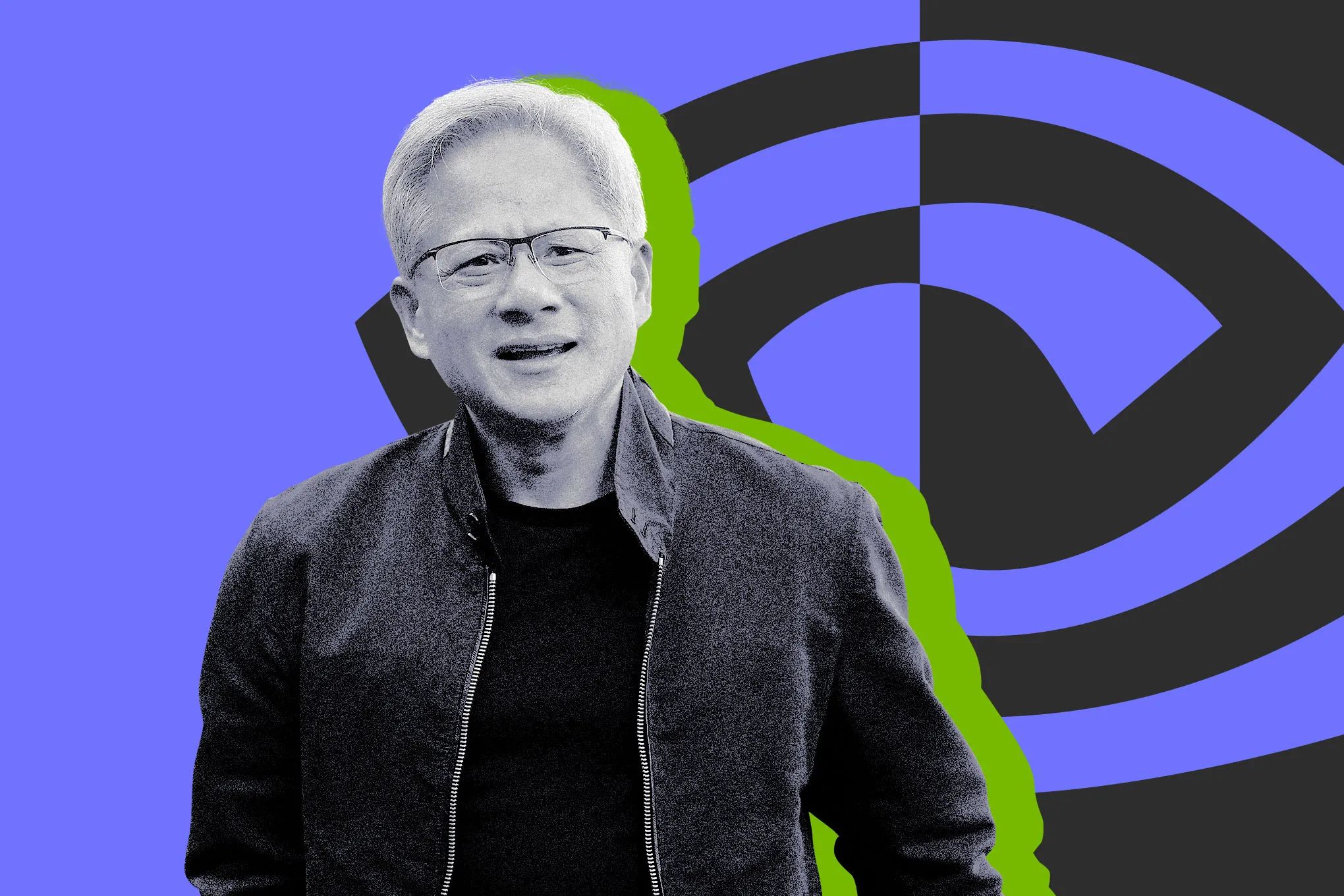
The debrief: On the Lex Fridman podcast released March 23, Nvidia CEO Jensen Huang made the most attention-grabbing four words in AI this year: "I think we've achieved AGI." His definition wasn't the sci-fi version - it was Fridman's specific framing of whether AI can start, grow, and run a company worth over $1 billion. Huang said yes, and his primary example was OpenClaw. The clip went viral within hours, hitting 4.7 million views on Polymarket's post alone, and reignited the debate about whether the industry is genuinely at a new threshold - or whether it's redefining the goalpost to fit where it already is.
The details: Huang's exact framing is important to understand before you decide what to make of it. Fridman asked whether an AI could autonomously build a billion-dollar company - five, ten, or twenty years from now. Huang replied without hesitation: "I think it's now." He immediately hedged: "You said a billion, and you didn't say forever." He argues that OpenClaw agents are already being used to launch social applications, create viral digital content, and run autonomous workflows that generate real economic value - briefly, at scale, without constant human direction. He envisioned an AI creating "some interesting little app that all of a sudden a few billion people used for 50 cents" and then disappearing - which, he argued, matches the bar Fridman set. He also pulled back sharply when pressed further, admitting: "The odds of 100,000 of those agents building Nvidia is zero percent." The reaction split the industry. Supporters called it a pragmatic acknowledgment of where agentic AI actually is in early 2026. Critics said Huang conveniently moved the goalposts on a term that has enormous contractual and regulatory significance - pointing out that OpenAI's charter defines AGI as systems that "outperform humans at most economically valuable work," a standard vastly beyond a viral app that "dies away." The Lex Fridman transcript reveals Huang spent significant time on OpenClaw's architecture - calling it "what ChatGPT did for generative systems," and describing how it reinvented the computer by giving AI access to files, the web, APIs, and code execution in one integrated loop.
Why it matters: Whether or not Huang is right about AGI, the statement he made has real consequences. When the CEO of the company powering 80% of AI training declares AGI achieved, it shifts capital allocation, regulatory timelines, and hiring plans at every major enterprise. The subtext is deliberate: if AGI is here, the demand for Nvidia's chips has no near-term ceiling. For founders, the more useful takeaway is the OpenClaw framing - Huang is telling you that the benchmark for AI value creation has moved from "can it answer questions?" to "can it autonomously build something real?" The companies that survive the next two years will be the ones designing for autonomous execution, not just smarter responses. And Huang's hedge matters too: short-lived, narrow economic value is not the same as durable business moats. Don't confuse a viral agent app with a defensible company.
THE LOBSTER TAKES OVER: OPENCLAW HITS 250K GITHUB STARS, ENTERS WECHAT, AND TRIGGERS GOVERNMENT CRACKDOWNS IN CHINA
The debrief: OpenClaw - the open-source AI agent that Jensen Huang called the "operating system for personal AI" at GTC - had its biggest week yet. Tencent integrated it directly into WeChat, giving over one billion monthly active users access to AI agents via chat. The project hit 250,000 GitHub stars. Version 2026.3.22 dropped with a ClawHub marketplace, multi-model sub-agents, and critical session fixes. And China's government issued its first formal security warnings about the tool, with nearly 23,000 users' assets exposed to cyberattack. The lobster, as Chinese users call it, is everywhere - and the world is just now starting to reckon with what that means.
The details: OpenClaw's China moment is one of the fastest grassroots technology adoptions in recent memory. Tencent held free in-person OpenClaw setup sessions in Shenzhen, helping hundreds of users install the tool on TencentCloud. ByteDance's cloud unit launched ArkClaw, a browser-based version that eliminates local setup. JD.com and Meituan partnered with Lenovo to offer paid remote installation services. Baidu engineers are photographed installing it on laptops at their Beijing headquarters. The tool is being used by young Chinese job seekers to autonomously scan listings, apply, prep for interviews, and track applications - with one 24-year-old Shanghai user telling NBC News it saves him three hours per day. But it's not all upside: China's National Cybersecurity Alert Center warned that 23,000 OpenClaw users had their assets exposed to the internet and are "highly likely to become priority targets for cyberattack." The Chinese Academy of Information and Communications Technology is now developing formal standards for "claw" agents, and state-owned enterprises, universities, and government employees have begun restricting or banning it - mirroring similar restrictions at U.S. companies. On the product side, OpenClaw v2026.3.22 dropped this week with ClawHub marketplace integration (think an app store for agents), the /btw command for side conversations mid-task, adjustable sub-agent thinking levels to control costs, and multi-model sub-agents - letting cheaper models handle simple tasks while reserving expensive frontier models for complex reasoning. The economics matter: with Claude Opus 4.6's 1-million-token context window, cost-unaware OpenClaw deployments can burn through API budgets fast.
Why it matters: CNBC called OpenClaw's moment "AI's ChatGPT moment" - the point where a technology stops being a developer curiosity and becomes a consumer phenomenon. The difference is that, unlike ChatGPT, OpenClaw is open-source, runs locally, and works with any model, which means OpenAI, Anthropic, and Google don't own it and can't control it. One industry CEO called it "the black swan moment most big AI companies feared." For founders: the ClawHub marketplace is the first serious attempt to build an app store layer on top of agentic AI, which means distribution, monetization, and platform dynamics are about to emerge in the agent space the same way they emerged on iOS and Android. The security risks are real and will only grow as more enterprise data flows through autonomous agents. If you're building on OpenClaw or deploying it internally, read the v2026.3.22 session management fixes - the bug where stale cron job sessions accumulate silently is affecting production deployments right now.
FEDERAL JUDGE SAYS ANTHROPIC BAN LOOKS LIKE "AN ATTEMPT TO CRIPPLE" THE COMPANY - RULING IMMINENT

The debrief: The March 24 hearing everyone was watching delivered exactly the signal Anthropic needed. U.S. District Judge Rita F. Lin opened Tuesday's preliminary injunction hearing by telling the courtroom that the Pentagon's blacklisting of Anthropic "looks like an attempt to cripple Anthropic" and that the government's conduct was "troubling," specifically questioning whether it constituted illegal punishment for speech. She said she expects to issue a ruling within days. If granted, the preliminary injunction would pause the supply-chain risk designation while the full lawsuit proceeds. If denied, Anthropic continues fighting the blacklist while it actively erodes enterprise relationships.
The details: Judge Lin's remarks were the starkest judicial signal yet that the Trump administration's legal theory may not hold up. She pressed the government's lawyer on what would justify a supply-chain risk designation under the relevant statute, pushing back on the DOD's argument that Anthropic's mere stubbornness in contract negotiations could qualify a company for a designation historically reserved for foreign adversaries like Huawei. "What I'm hearing from you is that it's enough if an IT vendor is stubborn and insists on certain terms and asks annoying questions, then it can be designated as a supply chain risk," Lin said. "That seems a pretty low bar." She separately questioned whether the government violated the law not just by canceling the contract - which she said the Pentagon has every right to do - but by extending the ban to all commercial activity with any Pentagon contractor or partner. Anthropic's lawyer Michael Mongan made clear the ask is narrow: the injunction would not force the government to use Claude, only prevent the extra-contractual punishment. Breaking Defense reported that Trump and Hegseth's own public social media posts may have undermined the government's legal position, with one attorney calling Trump's Truth Social posts "admissions against interest" that signal retaliatory intent. A ruling is expected before the end of the week.
Why it matters: A preliminary injunction would be a significant win for Anthropic - not because it resolves the underlying case, but because it stops the hemorrhaging. Over 100 enterprise customers have already contacted Anthropic with concerns, and the company's CFO has told the court the designation could cost multiple billions in 2026 revenue. Every day the designation stays live, more enterprise procurement teams quietly route away from Claude out of caution. For the broader AI industry, Judge Lin's framing is the most important signal in this case so far: she's treating this as a question of government overreach and speech retaliation, not a question of national security deference. That framing makes it significantly harder for the government to win on the First Amendment claim. Watch for the ruling - it will reshape how every AI company thinks about government contract negotiations for years.

Global AI Quick Hits
OpenAI raises another $10 billion at $730B valuation - with a 17.5% guaranteed return - OpenAI is seeking a fresh $10B round from private equity firms, reportedly offering investors a guaranteed minimum return of 17.5% to attract capital. The terms signal that even at $730 billion, OpenAI needs creative financing structures to keep pace with $600 billion in projected infrastructure spending through 2030.
Claude gets computer use - opens your apps, fills your spreadsheets, browses your browser - Anthropic launched computer use for Claude in research preview via Cowork and Claude Code on macOS. Claude can now take over your screen, navigate browsers, fill spreadsheets, and complete tasks the way you would sitting at your desk. This is the most significant capability expansion since Claude Code launched.
CFO survey: AI is now in workforce budgets, not just roadmaps - A Wall Street Journal survey of chief financial officers found that companies are now formally planning headcount reductions driven by AI automation, with administrative roles most exposed. This is the transition from "AI might affect jobs" to "AI is already in our 2026 staffing model."
OpenAI to nearly double headcount to 8,000 by year-end - Even as companies cut workers citing AI, OpenAI is hiring aggressively across product, engineering, sales, and enterprise - a sign that frontier AI is evolving from research lab to full-scale operating company. The model race still matters, but so does the sales force behind it.
- Drew & the rest of the humans behind The AI Debrief