
The Toolkit·March 13, 2026·6,903 reads
Anthropic Sues the Pentagon
#QuitGPT hits 2.5 million. Claude hits #1. Oracle fires 30,000.

Last week, we told you to watch at 5:01 PM on Friday. Here's what happened: Anthropic didn't blink. The Pentagon labeled them a national security risk. Anthropic filed two federal lawsuits. And 2.5 million ChatGPT users rage-quit in protest of OpenAI taking the deal Anthropic walked away from.
We are watching the AI industry split into two camps in real time - and this week made the fault lines impossible to ignore.
In today’s AI debrief:
- Anthropic sues the Pentagon after being labeled a supply-chain risk, putting $60B in investor capital on the line
- #QuitGPT explodes to 2.5 million users - Claude hits #1 on the App Store for the first time
- Oracle and Block announce 34,000 layoffs in a single week, both explicitly crediting AI
- Quick hits on Nvidia's GTC "Super Bowl," the Senate approving AI for staff, GPT-5.4, and more

ANTHROPIC FILES FEDERAL LAWSUITS AFTER PENTAGON DESIGNATES IT A SUPPLY-CHAIN RISK
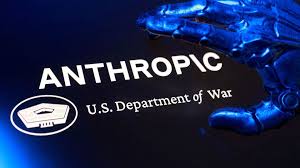
The debrief: After Anthropic refused to strip safety guardrails from Claude, the Department of Defense officially labeled the company a supply-chain risk - a designation that could bar all government contractors from using Claude and potentially force companies like Nvidia to sever commercial ties with Anthropic. Anthropic responded by filing lawsuits in both California and Washington, D.C., turning a contract dispute into a full legal war that puts $60 billion in VC-backed investment at existential risk.
The details: The supply-chain risk designation is unprecedented for an AI company and carries consequences far beyond losing a single government contract. If it holds, any company that does business with the U.S. military - including major Anthropic partners and cloud providers - could be legally obligated to cut ties with Anthropic entirely. The designation also immediately threatens the $60 billion investment from over 200 venture capital firms that backed Anthropic based on the assumption that a safety-focused AI company could coexist with government clients. Anthropic's lawsuits argue the designation was retaliatory and legally improper, filed in California (Anthropic's home jurisdiction) and D.C. (where Pentagon policy is made). Meanwhile, OpenAI, Google, and xAI have all agreed to "any lawful use" terms with the DoD, leaving Anthropic as the sole major frontier AI lab in open legal conflict with the federal government. The Pentagon is now actively fast-tracking both OpenAI and Google as Claude replacements inside classified networks, with xAI's Grok already approved for classified use.
Why it matters: This is the moment the "safety-first AI company" business model gets stress-tested at the highest possible level. Anthropic built its brand - and raised billions - on the premise that ethical guardrails were a competitive advantage, not a liability. Now that positioning is costing them their largest government contract and potentially threatening their entire partner ecosystem. For every founder watching this: the Pentagon is sending a message to the entire industry that "national security" classifications can be weaponized against any company that doesn't comply. The legal outcome will determine whether an AI company can maintain usage policies against government pressure or whether the DoD effectively sets the terms for every frontier AI lab. Watch the California and D.C. courts - this is the most consequential AI legal case in history
2.5 MILLION USERS ABANDON CHATGPT - CLAUDE HITS #1 ON THE APP STORE FOR THE FIRST TIME
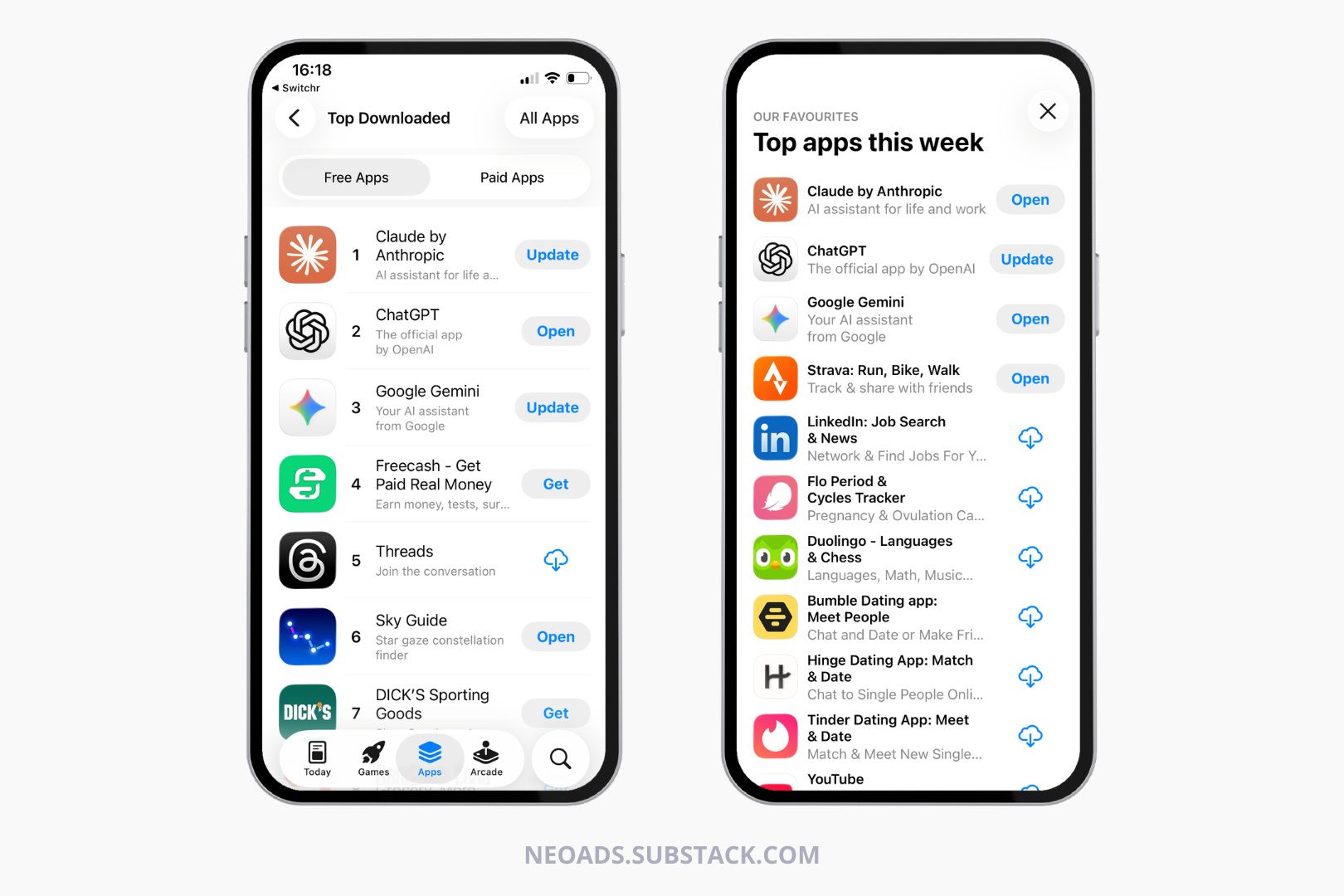
The debrief: After OpenAI agreed to deploy its models on U.S. Department of Defense classified networks - accepting the exact terms Anthropic refused on ethical grounds - a massive user revolt exploded online. The #QuitGPT movement attracted 2.5 million supporters, ChatGPT uninstalls surged 295% overnight, and Claude hit the number-one spot on the U.S. App Store for the first time in Anthropic's history. OpenAI rushed out GPT-5.4 days later in what analysts are calling a damage-control product launch.
The details: The #QuitGPT protest became one of the fastest-growing consumer tech boycotts in recent memory. One-star ChatGPT reviews surged 775% in 24 hours. On March 3, protesters gathered outside OpenAI's San Francisco headquarters. Reddit and X are filled with migration guides directing users to Claude and Grok as alternatives. Sam Altman defended the Pentagon deal in a Fortune interview, claiming OpenAI's contract includes the same restrictions Anthropic fought for - bans on mass surveillance and human oversight requirements for autonomous weapons - but critics called his response unconvincing, noting the contract language allows exceptions "at the government's discretion." OpenAI's response was GPT-5.4, released March 5, positioned as their "most capable and efficient frontier model for professional work," featuring a 1-million-token context window and mid-response reasoning capabilities. The launch appeared designed to give users a reason to stay rather than migrate. Meanwhile, Claude's App Store rank reflects genuine migration: Anthropic reported that paid subscriber growth exceeded 200% year-over-year as of January 2026, and the protest week almost certainly accelerated that curve.
Why it matters: Consumer AI users just showed they have opinions about AI ethics - and they'll act on them. That's new. Until now, the assumption was that convenience and capability always win; users would accept whatever terms AI companies set. #QuitGPT is the first evidence that a meaningful segment of the market will actively switch products over values alignment. For founders building on top of OpenAI APIs: you now have non-technical customer stakeholders who may ask which AI provider you use and why. For Anthropic: the App Store win is real, but replacing $200M+ in government contracts with consumer subscriptions is not a like-for-like trade. The deeper story is that the AI market is bifurcating - OpenAI wins government and enterprise, Anthropic captures the values-conscious prosumer. Whether either lane is big enough to build a dominant business is the question that will define the next five years.
ORACLE AND BLOCK FIRE 34,000 WORKERS IN ONE WEEK - AND BOTH BLAME AI DIRECTLY

The debrief: Oracle announced plans to cut 20,000–30,000 employees to redirect $8–10 billion toward AI infrastructure, while Block (Square, Cash App) eliminated 4,000 roles - nearly 40% of its workforce - with CEO Jack Dorsey explicitly stating these positions had been made redundant by AI tools. Together, the two announcements represent the most direct public acknowledgment yet that AI is actively replacing workers, not just "augmenting" them.
The details: Oracle's cuts span multiple divisions and are set to begin rolling out through March 2026, with the freed capital earmarked entirely for AI infrastructure buildout. The company joins a growing list of enterprises that are treating workforce reduction as the primary funding mechanism for AI investment - essentially having existing employees pay for their own replacements through severance and headcount savings. Block's announcement was starker. Jack Dorsey did not use the standard corporate euphemisms of "restructuring" or "efficiency optimization." He said, plainly, that the eliminated roles are cheaper and less effective than AI tools that can do the same work. Block cut nearly 40% of its team in a single action. Combined with 30,700 tech layoffs already recorded in January and February, March 2026 is on pace to be the worst month for tech employment since the 2022-2023 correction - but unlike that era's interest rate-driven cuts, these are openly structural. Goldman Sachs had forecast 5,000–10,000 net AI-driven job losses per month across exposed industries; Oracle and Block alone blew past that estimate in a single week.
Why it matters: The corporate playbook has changed. Companies used to obscure AI-driven layoffs behind neutral language because of reputational and regulatory risk. Oracle and Block just proved that openly citing AI as the reason for mass cuts draws minimal consequences - and may actually be rewarded by investors as a credible growth signal. For founders: this is both a warning and an opportunity. The warning is that "AI efficiency" is becoming an expectation, not a differentiator - investors will start asking why your headcount is growing if AI should be doing more. The opportunity is that the 34,000 people cut this week are highly skilled, suddenly available, and motivated. The best AI-native companies will hire them at a fraction of what Oracle and Block paid. The workforce displacement story is no longer theoretical. It's happening, it's accelerating, and the companies doing it are telling you exactly why.

Global AI Quick Hits
NVIDIA GTC next week - Wall Street calling it the "Super Bowl of AI" - NVIDIA's annual GPU Technology Conference kicks off next week, with investors expecting new hardware announcements, including a dedicated inference chip. Truist analysts previewed the event as a likely positive catalyst for the stock, with management expected to signal that supply, production, and demand are all aligned for continued growth through 2026.
U.S. Senate approves ChatGPT, Gemini, and Copilot for official staff use - The Senate Sergeant at Arms cleared three major AI tools for use by Senate staff on drafting, research, and briefing tasks. The House had already approved similar tools, including Claude Pro. Staff are restricted from inputting classified material or personally identifiable information.
GPT-5.4 and Gemini 3.1 Flash-Lite both drop this week - OpenAI's GPT-5.4 (March 5) targets professional workflows with a 1M-token context window and mid-response planning capabilities. Google's Gemini 3.1 Flash-Lite targets developers at $0.25 per million input tokens - roughly 2.5x faster to first token than its predecessor and designed for bulk, real-time workloads.
Claude Code Review launches for Teams and Enterprise - Anthropic launched Code Review inside Claude Code, designed to catch bugs in AI-generated pull requests before they reach production. The feature addresses a growing bottleneck: Claude Code is generating code faster than human reviewers can check it.

Join Our Free AI Community
We created the AI Insider as a place where anyone can learn to leverage AI and actually make money with it. It's completely free - no upsells, no paywalls. Inside, you'll find curated AI tools, step-by-step tutorials, and a community of founders and professionals sharing what's actually working. Whether you're just getting started or looking to level up your AI game, this is where you'll find the resources and support to turn AI knowledge into real results.
- Drew & the rest of the humans behind The AI Debrief