
The Toolkit·March 19, 2026·8,636 reads
$1 Trillion. 90 Days. And the AI Trial of the Century.
Nvidia doubled its forecast. Morgan Stanley issued a warning. Anthropic heads to court.
In partnership with

Want to get the most out of ChatGPT?

ChatGPT is a superpower if you know how to use it correctly.
Discover how HubSpot's guide to AI can elevate both your productivity and creativity to get more things done.
Learn to automate tasks, enhance decision-making, and foster innovation with the power of AI.

This week had three stories that, taken together, tell you everything you need to know about where the AI industry is headed. Nvidia just doubled its revenue forecast to $1 trillion. Morgan Stanley is warning that a capability breakthrough is arriving in 90 days and most of the world isn't ready. And the Anthropic lawsuit - already the most consequential AI legal case in history - just got a massive new twist.
Buckle up. Here's what you missed.
In today’s AI debrief:
- Jensen Huang drops a $1 trillion demand forecast at GTC 2026 - and announces AI data centers in space
- Morgan Stanley warns a "massive AI breakthrough" hits in April–June 2026, and executives at top AI labs say it will "shock" investors
- The DOJ files its 40-page rebuttal calling Anthropic an "unacceptable risk to national security" - 149 former federal judges file back in support
- Quick hits on OpenAI's Q4 IPO push, Meta's $27B infrastructure deal, Mistral Small 4, and ServiceNow's brutal jobs forecast

JENSEN HUANG RAISES AI DEMAND FORECAST TO $1 TRILLION - AND ANNOUNCES DATA CENTERS IN SPACE
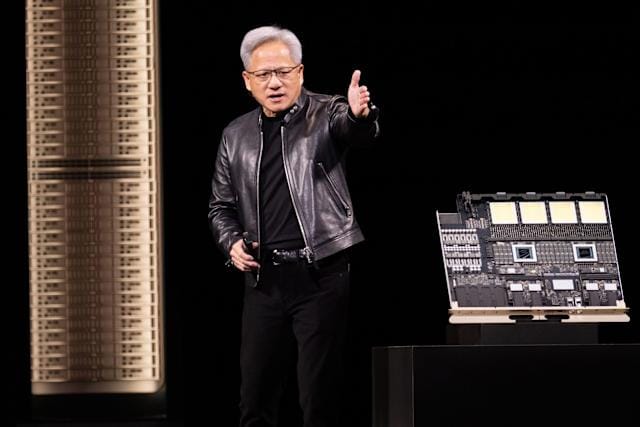
The debrief: At his sold-out GTC 2026 keynote in San Jose, Nvidia CEO Jensen Huang announced the Vera Rubin AI platform, raised his demand forecast from $500 billion to $1 trillion through 2027, unveiled the Groq 3 LPU inference chip, launched NemoClaw as the "operating system for agentic AI," and - in perhaps the most unexpected moment of the night - announced that Nvidia is taking its AI data centers to orbit with Vera Rubin Space-1. It was two and a half hours of announcements that made every other company's product roadmap look small.
The details: Vera Rubin is Nvidia's most integrated system ever - seven chip types, five rack-scale computers, operating as a single AI supercomputer. The headline number: 3.6 exaflops of compute and 260 terabytes per second of all-to-all bandwidth. Third-party analysis from Semi Analysis found Vera Rubin delivers roughly 50x more tokens per watt than the prior-generation Hopper H200. Combined with the newly unveiled Groq 3 LPU rack - the product of Nvidia's $20 billion Groq acquisition - the full system delivers 35x more throughput per watt than the previous Blackwell generation and opens what Huang called a "$300 billion annual revenue opportunity" from the inference layer alone. The $1 trillion demand forecast - doubled from Huang's $500 billion figure from just a year ago - was framed as a conservative estimate, with Huang suggesting actual demand could outpace supply. He described computing demand as having jumped 10,000 times over the last two years. NemoClaw, Nvidia's open-source agentic AI platform built in partnership with OpenClaw, was framed as the "Linux of the agentic era." And the space announcement - Vera Rubin Space-1, designed to power orbital data centers - drew laughs and gasps simultaneously. Huang acknowledged the obvious challenge: "In space, there's no conduction. There's no convection. There's just radiation, so we have to figure out how to cool these systems." Disney's free-roaming Olaf robot joined him onstage, powered by Nvidia's AI and deep reinforcement learning - a preview of its Disneyland Paris debut on March 29.
Why it matters: Nvidia just told the world that the AI infrastructure boom is not slowing down - it's doubling. The $1 trillion demand signal through 2027 is the single most important data point in AI investing right now, because it tells you that every hyperscaler's CapEx guidance is going to stay elevated or go higher. The inference story is what every founder should focus on: training built the boom, but inference is where ongoing revenue gets made. As AI models run longer, reason deeper, and act more like software agents than chatbots, the economics of tokens per watt become the margin story of the decade. For VC-backed startups: the chip access problem is getting solved, but the cost curve is moving in both directions. More computing availability means more competition. The companies that survive won't just have access to Vera Rubin - they'll have built applications that can justify the premium token price Nvidia is targeting. Space data centers may sound like a joke, but orbital solar power and zero-atmosphere cooling could one day make it the cheapest computing on earth. Take note.
MORGAN STANLEY: A "MASSIVE AI BREAKTHROUGH" IS 90 DAYS AWAY - AND MOST OF THE WORLD ISN'T READY

The debrief: In a sweeping new research report, Morgan Stanley warned that a transformative leap in AI capability is likely to hit in April–June 2026, driven by an unprecedented accumulation of compute at America's top AI labs. Executives at major AI labs are privately telling investors to brace for progress that will "shock" them. OpenAI's GPT-5.4 "Thinking" model already scored 83% on the GDPVal benchmark - at or above human expert level on economically valuable tasks - and Morgan Stanley says the market "is not prepared for the non-linear increase in LLM capabilities" that is about to materialize.
The details: Morgan Stanley's thesis is built on scaling laws that, according to the report, are still holding firm. The bank cites Elon Musk's argument that applying 10x the compute to LLM training effectively doubles a model's intelligence - and says the data backs that claim. With AI labs now running some of the largest compute clusters in history, a capability step-change is the mathematical conclusion. The economic consequences the bank forecasts are severe: AI becomes a "deflationary force" as systems replicate human work at a fraction of the cost, executives execute large-scale workforce reductions, and Sam Altman's vision of one-to-five-person companies outcompeting large incumbents starts becoming real. The infrastructure demands are equally staggering - Morgan Stanley estimates the U.S. could face a power shortage of 9 to 18 gigawatts by 2028 as AI data centers consume electricity at city scale, with developers already converting Bitcoin mining facilities and installing natural gas turbines directly at data centers to keep up. The most alarming footnote: xAI co-founder Jimmy Ba has suggested that recursive self-improvement loops - where AI systems autonomously upgrade their own capabilities - could emerge as early as the first half of 2027.
Why it matters: When Morgan Stanley says a capability jump is 90 days out and executives at top labs are calling it "shocking," that is no longer a research curiosity - it's a signal that institutional capital is now pricing in a discontinuous leap. For founders: the question is no longer "when will AI be good enough to automate X?" It's "are we building something that survives when the next capability threshold lands?" The recursive self-improvement timeline is the most provocative detail - if AI begins meaningfully accelerating its own development in 2027, every product roadmap built beyond that point is speculative. The power crisis is also real: the 9-18 gigawatt shortfall Morgan Stanley projects by 2028 is larger than the entire electricity consumption of several U.S. states. Energy infrastructure is the next AI bottleneck - and the companies that solve it first will have a moat that no model can replicate.
DOJ CALLS ANTHROPIC AN "UNACCEPTABLE RISK" - 149 FORMER FEDERAL JUDGES FILE BACK IN SUPPORT
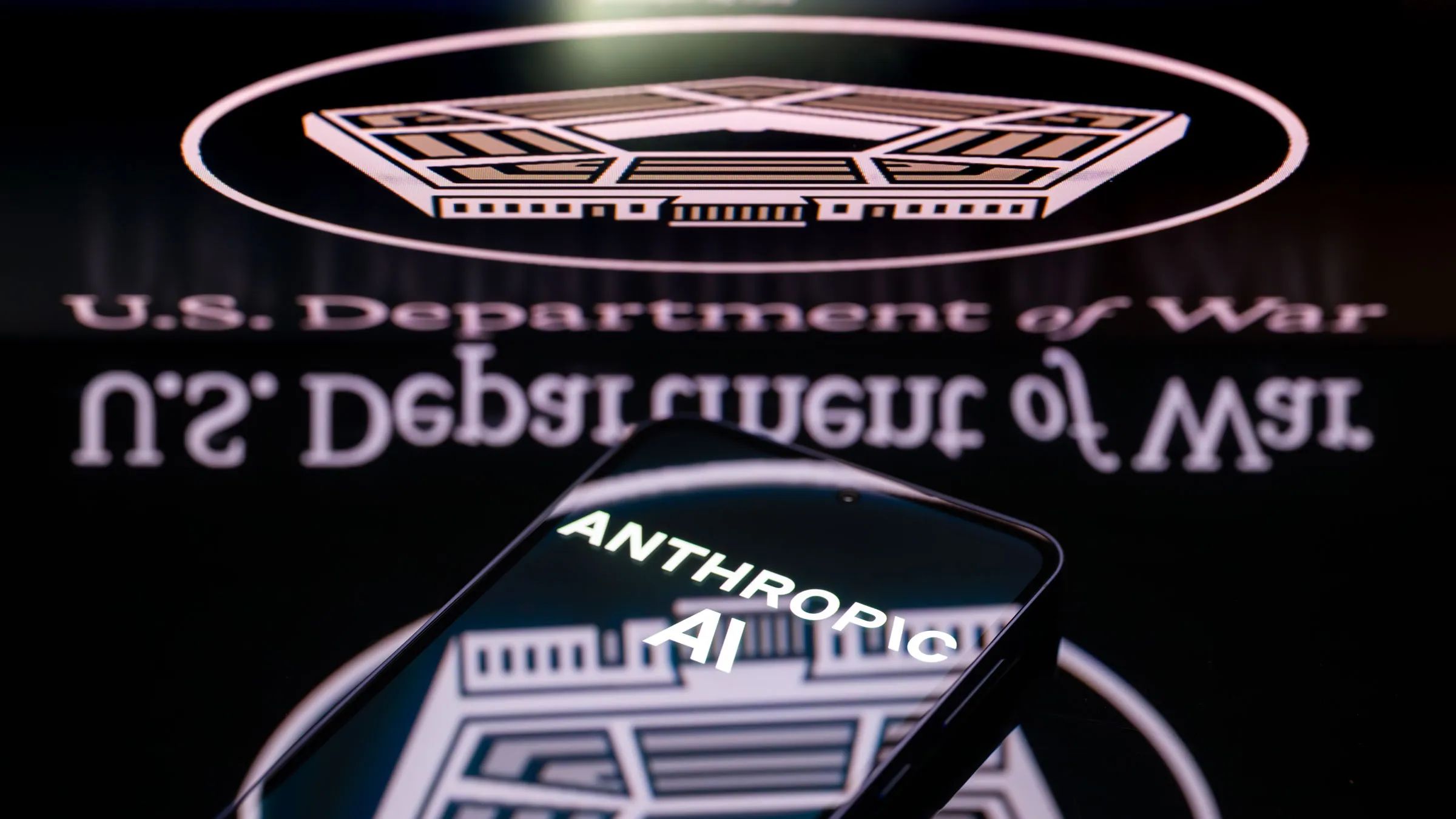
The debrief: The Anthropic-Pentagon legal battle escalated dramatically this week. The DOJ filed a 40-page rebuttal calling Anthropic an "unacceptable risk to national security," arguing the company could disable or secretly alter Claude during active military operations. In the same 24 hours, a bipartisan coalition of 149 former federal and state judges filed an amicus brief backing Anthropic, calling the supply-chain designation "substantively and procedurally unlawful." A preliminary injunction hearing is set for March 24. That date will determine whether Anthropic walks into court with the designation paused - or fighting from behind.
The details: The DOJ's 40-page filing is the government's most aggressive legal response yet. Attorneys argued that Anthropic's safety "red lines" - its refusals to allow Claude in autonomous weapons or domestic surveillance - are not protected speech but rather conduct, and that the company's ongoing role as developer and maintainer of Claude creates inherent risk: they could "subvert the design and/or functionality" of their tools or preemptively alter model behavior during warfighting. The Pentagon doubled down separately, with Under Secretary Emil Michael filing a declaration highlighting a new national security concern: Anthropic employs "a large number of foreign nationals to build and support its LLM products, including many from the People's Republic of China." The 149 former federal judges - filing on a bipartisan basis - countered that the DOD had misread the statute entirely, arguing that supply-chain risk law "narrowly limits" its application to malicious conduct like sabotage by hostile actors, not policy disagreements with domestic companies. Anthropic's CFO has already told the court that the designation could cost the company multiple billions in 2026 revenue, with over 100 enterprise customers making inquiries about their exposure. Microsoft, Amazon, Apple, and Google have all confirmed they will continue offering Claude through their platforms for non-Pentagon work.
Why it matters: The March 24 hearing is the most important date in AI law this year. If a federal judge grants Anthropic's preliminary injunction, the designation is paused while the case proceeds - and Anthropic buys time to fight from a position of relative strength. If the injunction is denied, the designation stays live while appeals play out and enterprise customer attrition accelerates. The 149 judges’ amicus brief signals to the court that legal experts across party lines view the government's statutory interpretation as a serious overreach. The foreign nationals’ argument is the most politically charged new development: it signals the government is willing to use Anthropic's global workforce as a national security lever even though, as the Foundation for American Innovation noted, Anthropic is widely considered the most proactive company in the AI industry at policing insider threats. Watch March 24.

Global AI Quick Hits
OpenAI preps Q4 2026 IPO at a potential $1 trillion valuation - CNBC confirmed OpenAI is targeting a Q4 2026 public listing. The company has hit $25 billion in annualized revenue - growing 17% from year-end 2025 - and is orienting aggressively toward enterprise productivity tools. An IPO at $1 trillion would be the largest public offering in history, surpassing Saudi Aramco's $25.6 billion raise in 2019. The catch: OpenAI doesn't expect to turn a profit until 2030 and faces a projected $207 billion funding shortfall by then.
Meta locks in $27 billion AI infrastructure deal with Nebius - Meta signed a five-year agreement giving it large-scale data center capacity from specialist cloud provider Nebius, underscoring how hyperscale AI demand is flowing to a new class of infrastructure intermediaries - not just traditional public cloud giants.
Mistral Small 4 launches as an open-source multimodal powerhouse - Mistral dropped Small 4 this week: 119 billion parameters, Mixture of Experts architecture, unified text and image inputs, configurable reasoning effort, and full open-source access on vLLM, llama.cpp, and HuggingFace. It's being positioned as a single model that replaces the Magistral, Pixtral, and Devstral lineup entirely.
ServiceNow CEO warns college grad unemployment could hit 30% in two years - ServiceNow's CEO said AI agents are taking over entry-level tasks fast enough that unemployment among recent graduates could reach 30% by 2028. Current data already shows 5.7% unemployment and 42.5% underemployment for recent college graduates - a cohort entering the worst white-collar job market in decades precisely as agentic AI matures.

- Drew & the rest of the humans behind The AI Debrief